

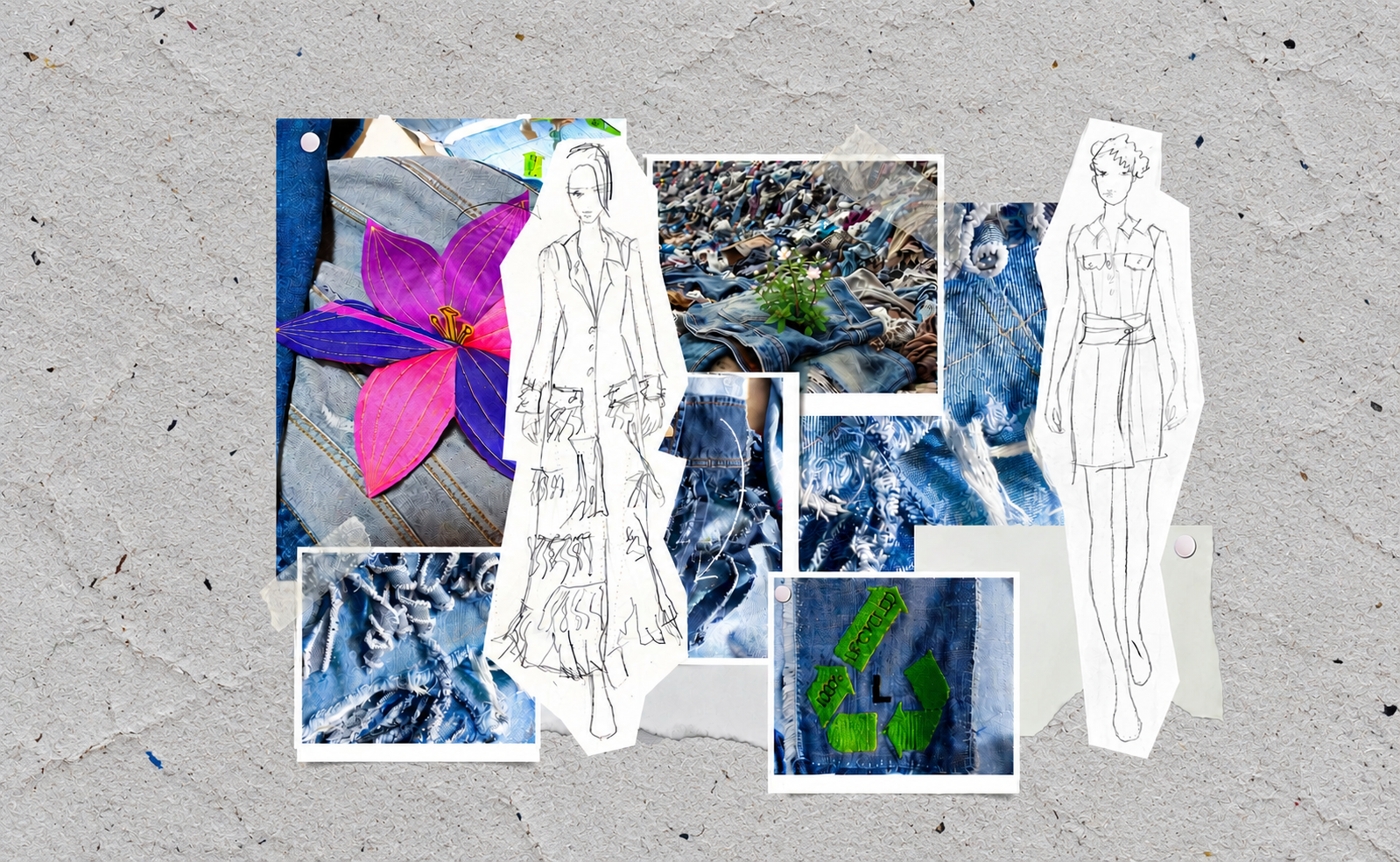
What is clothing upcycling?
Upcycling means transforming existing products or materials into objects with a new function, or with new practical and aesthetic value.
In fashion, it includes reworking garments, combining parts of different pieces, changing the construction of clothes, or using fragments of fabric to create new designs.
Unlike material recycling, in which textiles may be shredded and processed into new raw materials, upcycling usually preserves the existing structure of the woven fabric or knit.
So it does not require producing new fibres.
A second life for clothes and the environment
The clothing industry consumes huge amounts of raw materials, energy and water. At the same time, many garments taken out of use are still a resource fit for further use.
Upcycling can reduce the demand for new textiles and extend the life of materials that have already been produced.
This does not mean, however, that every upcycled product is automatically eco-friendly. What also matters is the durability of the new piece, any additional materials, how it is made, and whether it truly replaces the purchase of new clothing.
The greatest benefit is the chance to use resources that would otherwise be wasted.
What skills does upcycling require?
Designing with reclaimed materials is different from traditional sewing with new fabric.
An upcycling designer works with a fixed amount of material, existing seams, construction limits and possible signs of wear. She has to assess the quality of the material and plan the new form so that the finished piece is beautiful, functional and durable.
This often demands more flexibility than working with fabric bought in any quantity you like.
Reworking alone, however, is not enough to call something good design. What really counts is the quality of the workmanship, the proportions, the choice of materials and a well-thought-out construction.
Add to that experience, a wider range of craft skills, and accepting that production usually takes longer than in traditional tailoring.
Can reclaimed clothing be luxurious?
In fashion, luxury is traditionally associated with high-quality materials, masterful craftsmanship, exclusivity and uniqueness.
Upcycling can meet all of these criteria.
I know from my own experience that the quality of many materials produced today is far lower than that of materials from thirty years ago. In my upcycling practice, I have learned to recognise and choose the finest ones. Materials whose quality has stood the test of time can be true treasures.
I sew both by hand and on a machine, paying close attention to construction, details and finishing. However you look at it, even compared with products from well-known brands associated with luxury, my cashmere sweaters and silk dresses come out as remarkably luxurious in terms of the quality of materials and craftsmanship.
For me, luxury doesn’t have to mean new. It can mean a noble material, superb workmanship and a piece that simply cannot be repeated.
Carefully selected fabrics, individual design and hand finishing mean that reclaimed clothing can be authorial and one of a kind.
In many cases, the limited amount of material makes it impossible to create a second, identical piece. This is a quality especially valued in independent fashion and made-to-order design.
The value of such a garment, then, does not come only from the cost of the fabric used, but also from knowledge, working time and design decisions.
A material’s second-hand origin does not rule out luxury. The quality of a garment is decided above all by how it is designed and made.
Is upcycling the future of fashion?
Upcycling will not replace the entire clothing industry, nor will it solve the problem of overproduction on its own. But it can be an important part of a more responsible approach to design.
It also shows that innovation in fashion doesn’t always have to mean developing a new material or technology. Sometimes it means finding a valuable use for what has already been produced.
Thanks to this, second-hand clothes stop being seen only as a cheaper alternative to new products. They can become a fully fledged part of authorial fashion, where quality, originality and craftsmanship are what matter.
And you? Is there a piece in your wardrobe that you no longer wear, but whose fabric is too good to part with? What could it become?
Big hugs,
Peri XOXOXO


